
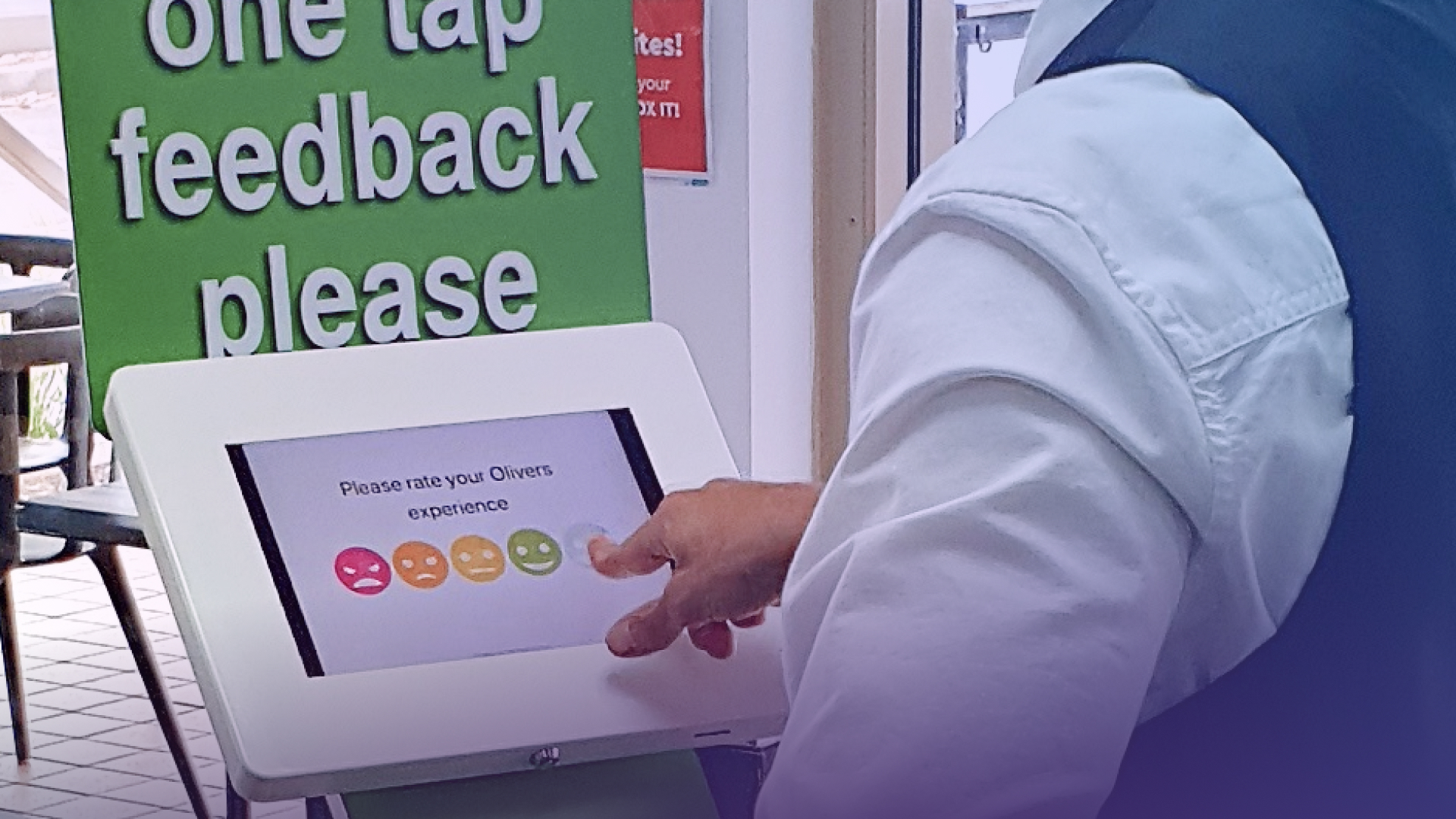
OneTap Feedback is a customer experience and operations platform purpose-built for multi-site quick-service restaurant (QSR) environments, where speed, reliability, and consistency are critical. Designed to operate in real-world conditions—including low or intermittent connectivity at the point of service—the platform enables continuous feedback capture without disrupting operations.
Built on Buzzy, OneTap delivers an offline-capable solution that combines kiosk-based survey capture, intelligent data mapping, and seamless Tableau integration. This architecture gives operators real-time visibility across locations, transforming frontline feedback into actionable operational insight.
The platform has now processed more than 1 million customer surveys, demonstrating not just scale, but sustained, production-grade usage across a distributed store network. This level of adoption reflects both the reliability of the solution in-store and its value to management teams seeking consistent, comparable insights across sites.
Operational Impact and Business Value
By centralising feedback collection and reporting, OneTap enables QSR operators to:
Identify service issues and operational inconsistencies in near real-time
Benchmark performance across locations
Drive faster, data-informed decision-making at both store and head office levels
Improve customer experience without adding operational complexity at the frontline
The offline-first design ensures feedback capture remains uninterrupted even in challenging network environments—a critical requirement in high-throughput QSR settings.
Long-Term Cost Efficiency and Reduced Technical Debt
Beyond immediate operational gains, OneTap highlights a significant long-term advantage of building on Buzzy: reduced maintenance overhead and technical debt.
Instead of managing and continuously upgrading a fragmented stack of mobile apps, backend services, and infrastructure, OneTap benefits from Buzzy’s centrally managed platform architecture. This has delivered measurable savings and risk reduction over time, including:
Support across 20+ major React Native releases handled centrally
350–650 developer hours avoided on mobile maintenance alone
US$50k–$100k+ in direct savings from avoided React Native upgrade work
Ongoing server and backend upgrades managed without additional client-side burden
These figures represent only the visible portion of the savings. More broadly, Buzzy reduces exposure to the cumulative complexity of dependency management, platform upgrades, and infrastructure evolution—areas that typically generate significant hidden costs and technical debt over time.
A Platform for Sustainable Scale
By combining operational reliability, real-time insight, and long-term maintainability, OneTap demonstrates how QSR operators can modernise customer experience systems without inheriting the traditional cost and complexity of custom-built technology stacks.
Collaboration with Teem
Teem, a trusted Buzzy business partner, played a crucial role in developing the OneTap Feedback solution. Their expertise in leveraging Buzzy's platform ensured a seamless integration and customisation process, enabling OneTap Feedback to maximise the benefits of Buzzy’s advanced features.
Teem's role included:
Expert Development: Teem utilised Buzzy’s capabilities to build a robust feedback solution tailored to the retail food segment.
Implementation Support: They provided ongoing support during the implementation phase, ensuring that the OneTap Feedback solution met all operational and customer requirements.
Conclusion
OneTap Feedback shows what happens when a high-utility operational product is built on a platform designed to keep evolving. Buzzy helped OneTap scale to 1M+ surveys, integrate with Tableau, and avoid significant mobile maintenance cost — while centralising the upgrades that would normally create technical debt over time.
For more information on how Buzzy can transform your feedback solutions, see more of Buzzy's Case Studies.
More information:
OneTap Feedback: https://onetapfeedback.com.au/
Teem: https://teem.net/
Buzzy: www.buzzy.buzz