Build from a semantic definition
Buzzy captures data, roles, screens, workflows, privacy settings, and lifecycle behaviour as one structured app definition.
Privacy choices
We use necessary storage to remember your preferences. With your consent, we also use Google Analytics for website insights and Tapfiliate for affiliate referral tracking. Read more in our Privacy Policy.
Buzzy Next
Buzzy Next is built for teams that need AI speed with enterprise control: semantic definitions, central governance, privacy controls, testing, security review, and agents coming next.
Medium, Large, and Enterprise deployment plans include priority access to Buzzy Next.
data · UI · workflows · roles · lifecycle
AI tools refine app definitions without creating another codebase.
Sensitive fields and scanner guidance support governed release decisions.
Repeatable checks support workflow coverage and release confidence.
Reusable patterns help teams scale governed app delivery.
Agents aligned with the app definition, security model, and governance requirements.
Why Buzzy Next
Buzzy Next gives teams AI speed without pushing every new app into another standalone codebase. Apps are defined semantically, governed centrally, and managed through shared platform controls for security, privacy, testing, release, and maintenance.
Buzzy captures data, roles, screens, workflows, privacy settings, and lifecycle behaviour as one structured app definition.
Teams can use AI to accelerate app delivery while keeping governance, security review, and access controls in the platform.
Centralised management and a maintained runtime reduce the burden of owning many one-off generated codebases.
Build
Buzzy Builder MCP brings MCP into the app creation workflow, so tools like Codex, Claude Code, Cursor, and other agents can help inspect and refine the semantic app definition that Buzzy runs, tests, secures, and maintains.

Inputs
Prompts, Figma, MCP clients NEW Teams can now create Buzzy apps from Codex, Claude Code, Cursor, and other MCP-enabled tools.Build
Buzzy Builder MCP MCP-enabled tools inspect and refine the semantic app definition.Definition
Semantic app definition The durable artifact captures data, UI, roles, workflows, privacy, and lifecycle behaviour.Release
Governed outputs The maintained Buzzy engine turns the definition into governed apps and interfaces.Custom MCP is already available for apps that need to expose governed data, actions, and workflows to assistants. Buzzy Next focuses here on Builder MCP: using MCP to create and maintain the app definition itself.
Govern
Built-in privacy controls safeguard sensitive data across applications, APIs, and AI agents. Security review brings risk decisions into the app lifecycle so teams can detect issues early and release with stronger governance.
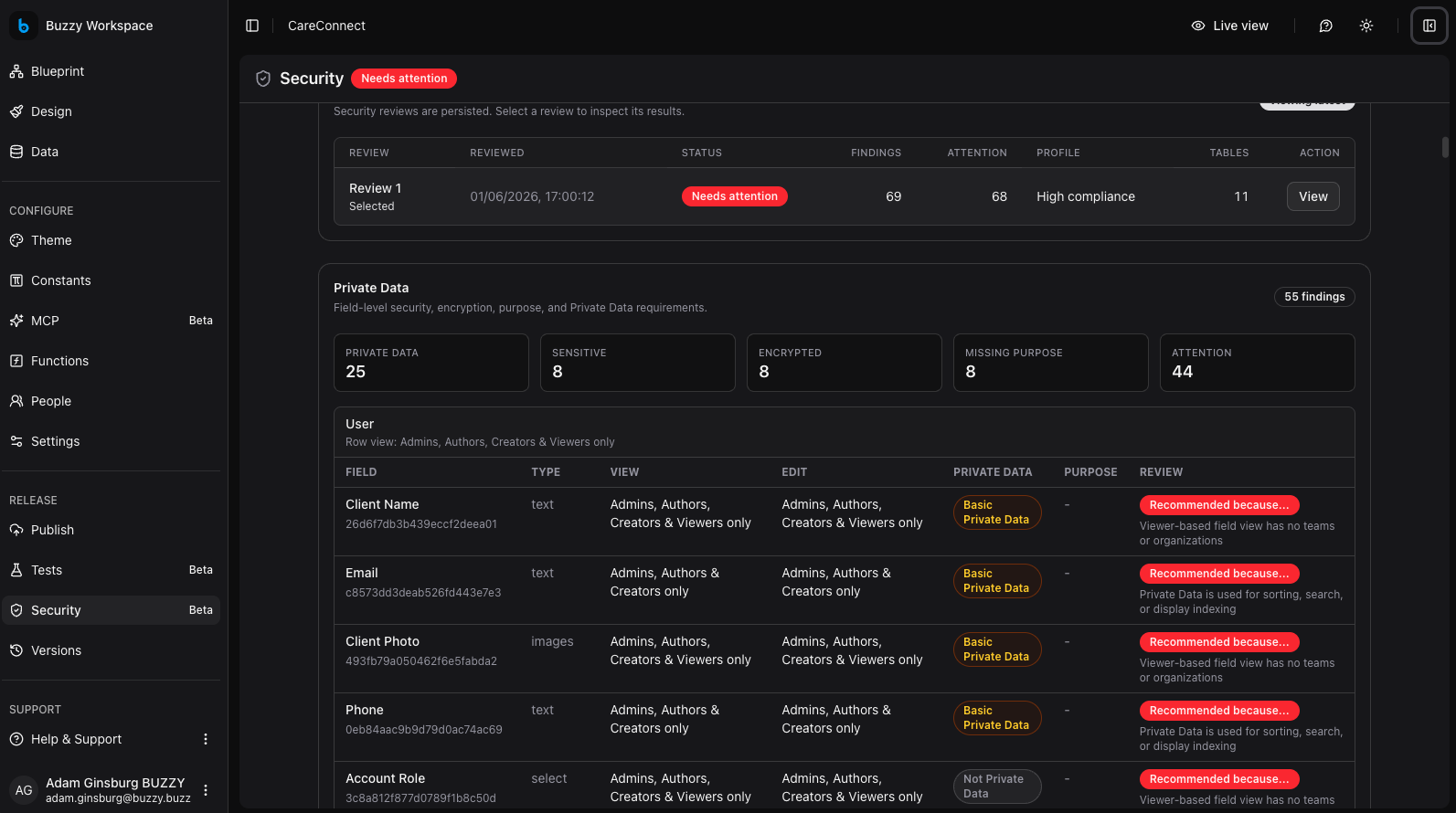
Field-level privacy controls help safeguard sensitive data across app screens, editor views, REST paths, and MCP-enabled workflows.
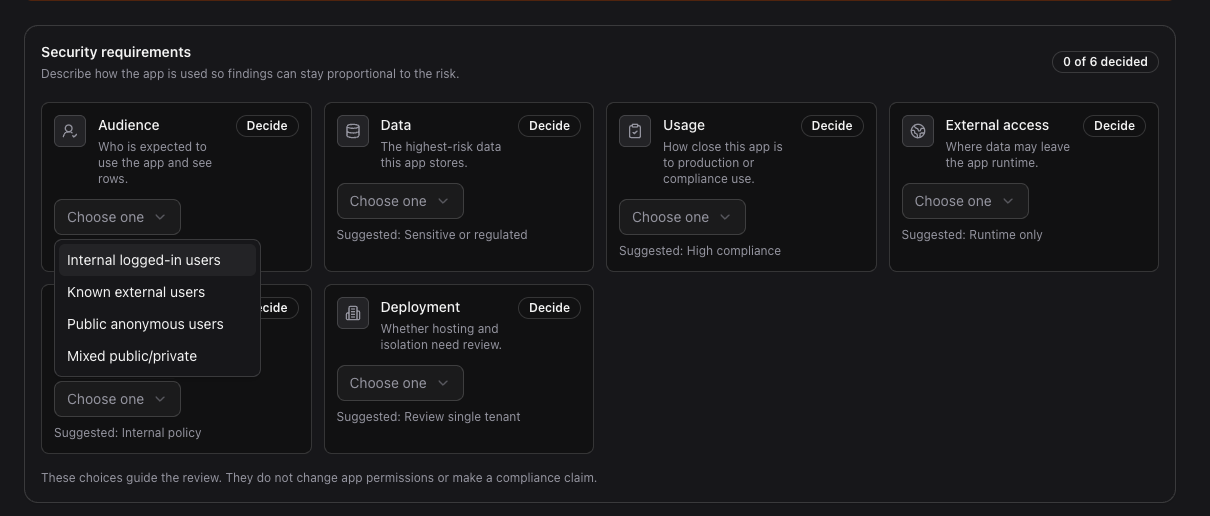
Security review helps teams assess audience, data, usage, deployment, and external access before an app is promoted.
Structured findings and guidance support governance workflows while leaving final compliance decisions with your organisation.
Test
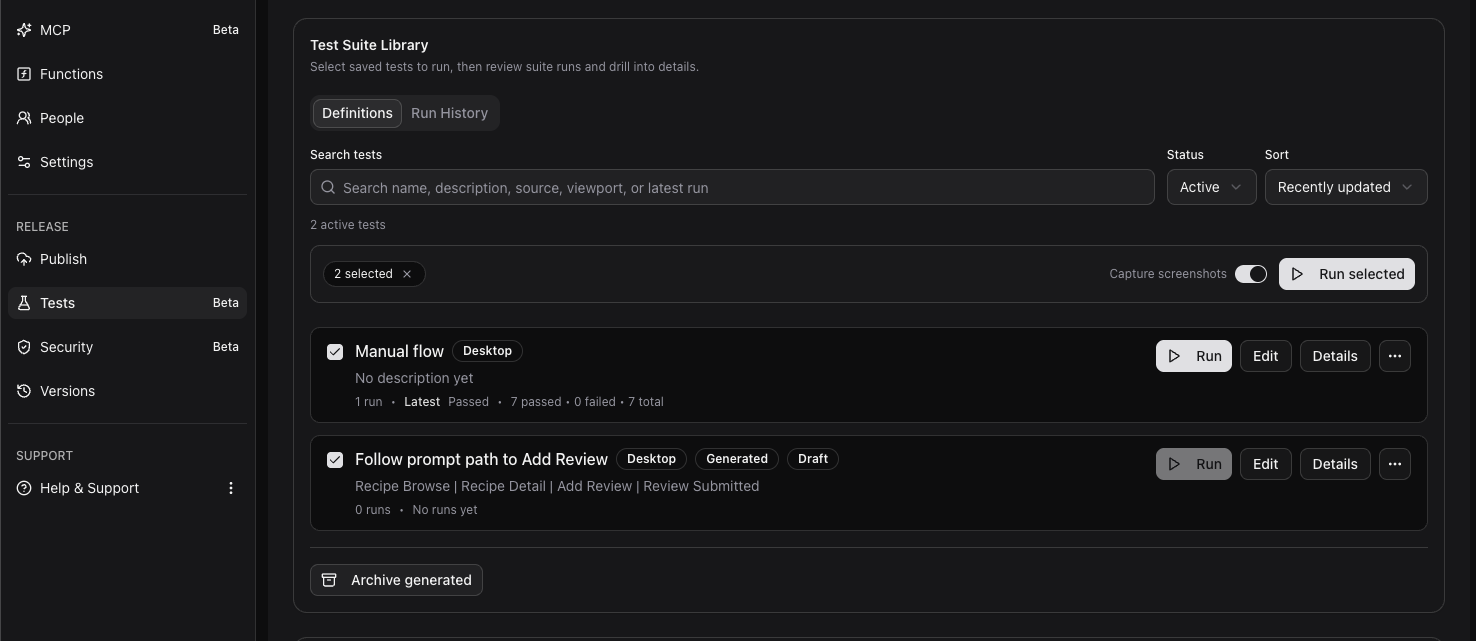
Buzzy Next helps teams turn key app workflows into repeatable tests, so releases are based on evidence rather than demo-day confidence.
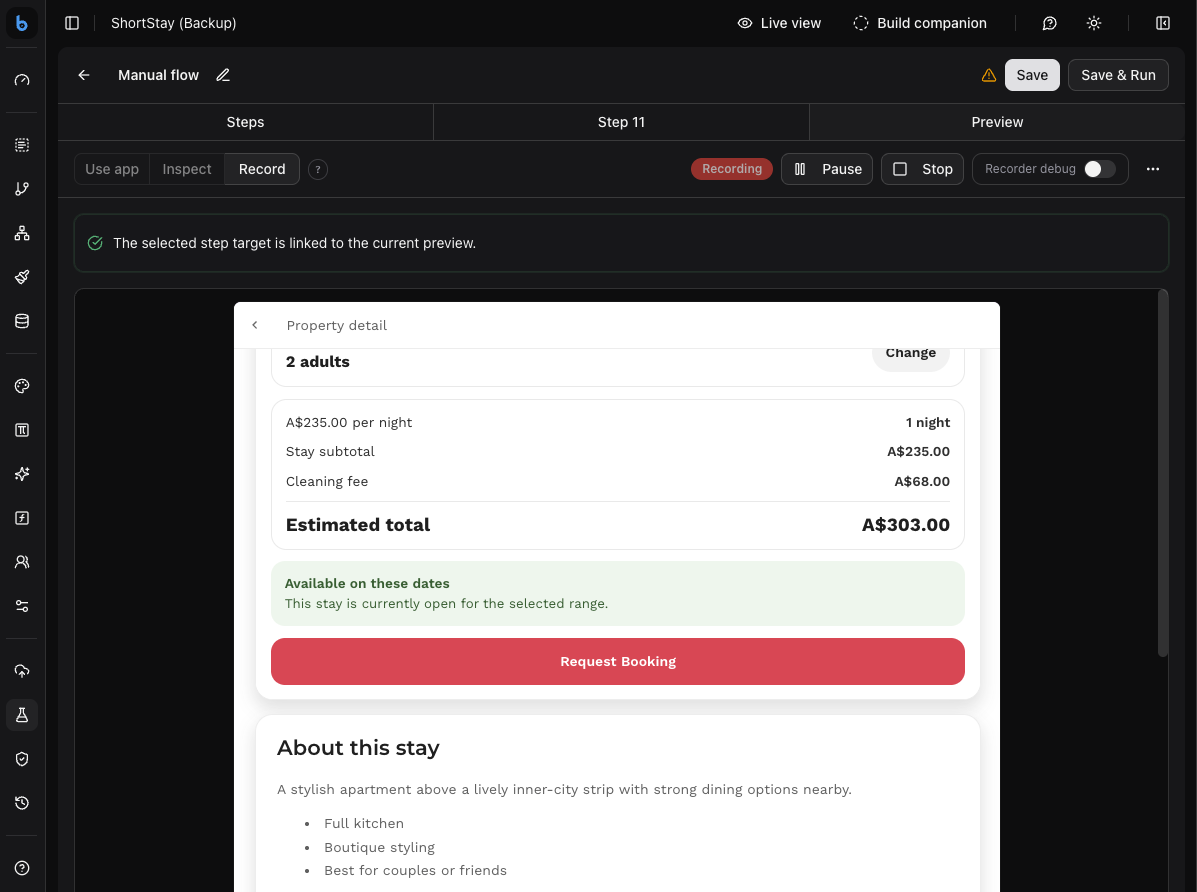
Record tests for the workflows teams need to trust before launch.
Check roles and data access before apps move between environments.
Give release decisions a repeatable evidence trail.
Scale
Toolkits and cookbooks help enterprises package approved design, workflow, and governance patterns so teams can move faster without every app drifting its own way.
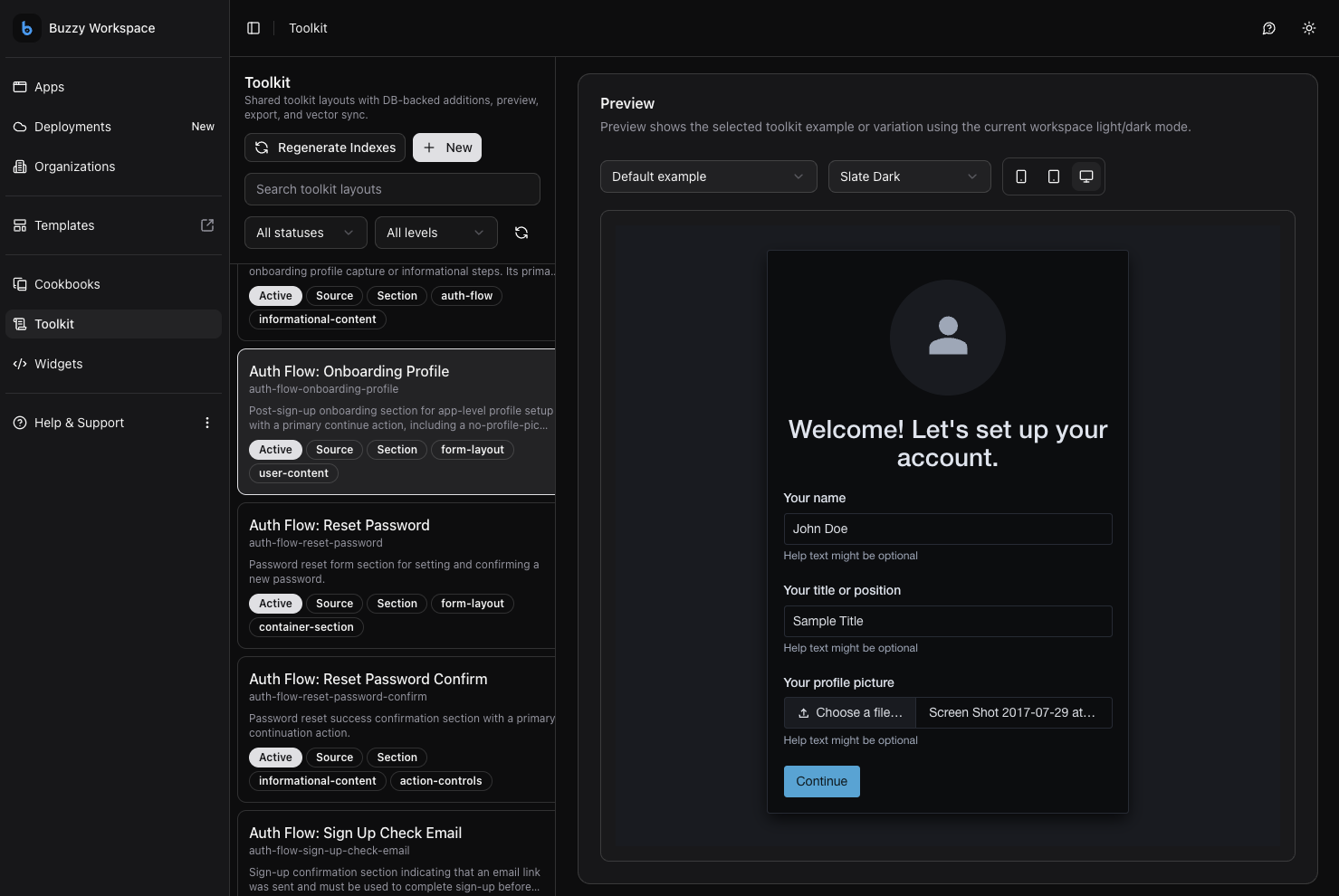
Start with UI and app patterns that match enterprise standards.
Turn proven workflows into cookbooks teams can reuse.
Keep AI-assisted delivery aligned across teams, brands, and operating models.
Coming soon
Buzzy Agents let teams build app-specific assistants from inside the governed Buzzy model, with the app definition, permissions, and lifecycle as their working context.
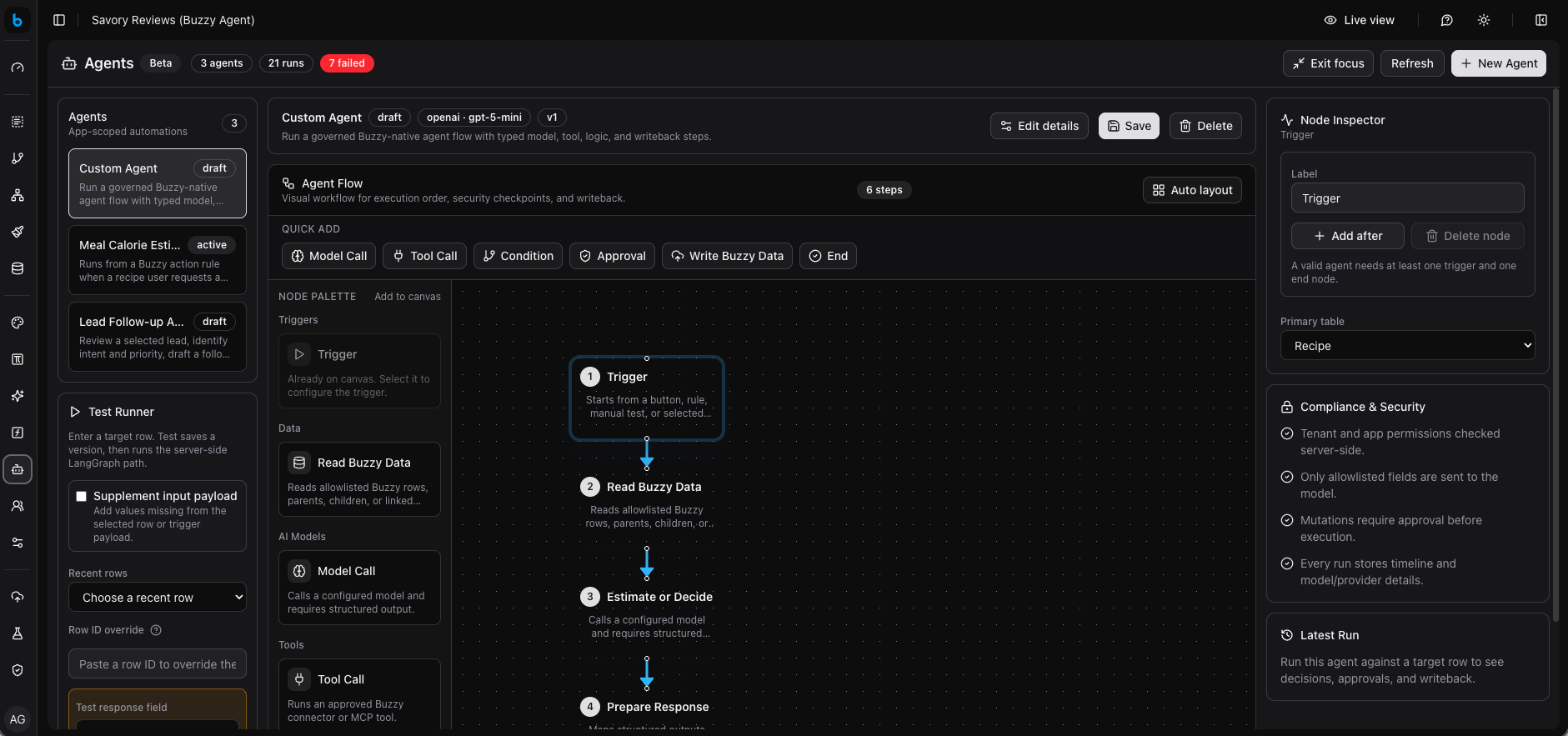
Create agents around the workflows, data, and decisions your app actually needs to support.
They operate through the same security and privacy model teams already use to manage the application.
Teams can add AI assistance without creating another disconnected workflow, integration, or compliance surface.