Speed trap
Every generated app becomes another codebase your team has to own.
Governed AI application delivery
Turn prompts into governed, production-ready applications using a semantic application definition instead of fragile generated code.
Product overview
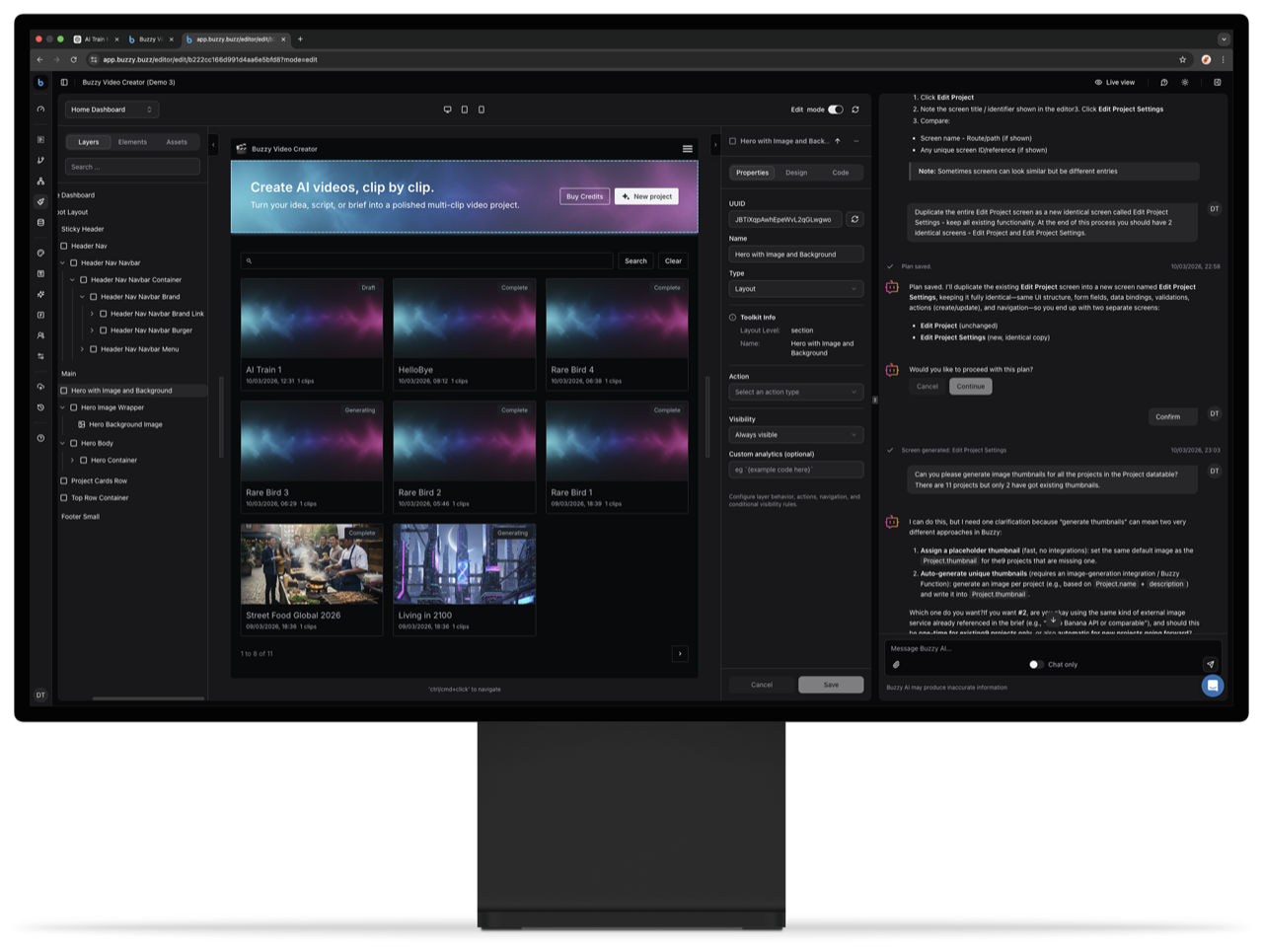
Take a quick look at how Buzzy turns an application idea into a structured, working product without leaving your team with another fragile generated codebase.
The problem
AI makes it easy to build apps. It also makes them harder to run, secure, and maintain.
Speed trap
Every generated app becomes another codebase your team has to own.
Risk
AI-generated code can introduce vulnerabilities, inconsistent architecture, and fragile integrations.
Technical debt
Maintenance costs rise as app count grows, especially when every app becomes its own system to maintain.
The cost of sprawl
Maintenance already consumes 60–70% of software spend. AI code generation is accelerating that burden.
Source: Pegotec, 2026
The shift
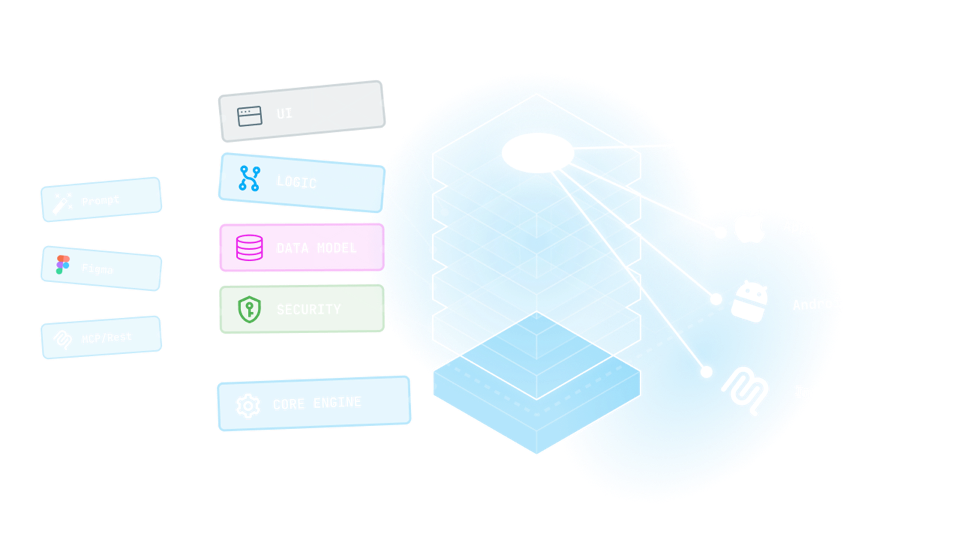
Instead of generating codebases, Buzzy creates a semantic application definition that runs on a governed core engine.
How it works
Buzzy turns prompts, designs, and APIs into a semantic application definition covering UI, logic, data, and security. All running on a central, governed core engine.
Source
One application definition holds the structure, logic, data, and security model.
Output
Deliver production-ready web and mobile applications from the same definition.
Updates
Roll out platform improvements centrally instead of updating every app one by one.
New whitepaper
Using Buzzy Builder MCP through Codex, we built a working sales incentive and planning prototype in days—then measured what remained as customer-specific code.
New field test · July 2026
AI-speed delivery without turning every requirement into source code your team must understand, secure, and maintain. *Directional prototype-equivalent estimate.
Read the field testApplication benchmark · June 2026
A benchmark comparing raw AI-generated application code with Buzzy’s semantic platform across maintenance, security, testing, and technical debt. *Illustrative model; results vary.
Read the benchmarklines of customer-specific code
Directional prototype-equivalent comparison. It counts the customer-specific code required for the demonstrated scope, not Buzzy’s platform implementation, and does not claim production hardening or a guaranteed total-cost reduction.
The practical conclusion
Architecture
Because application definition is separated from execution, upgrades, governance, and maintainability scale across every app built on the platform.
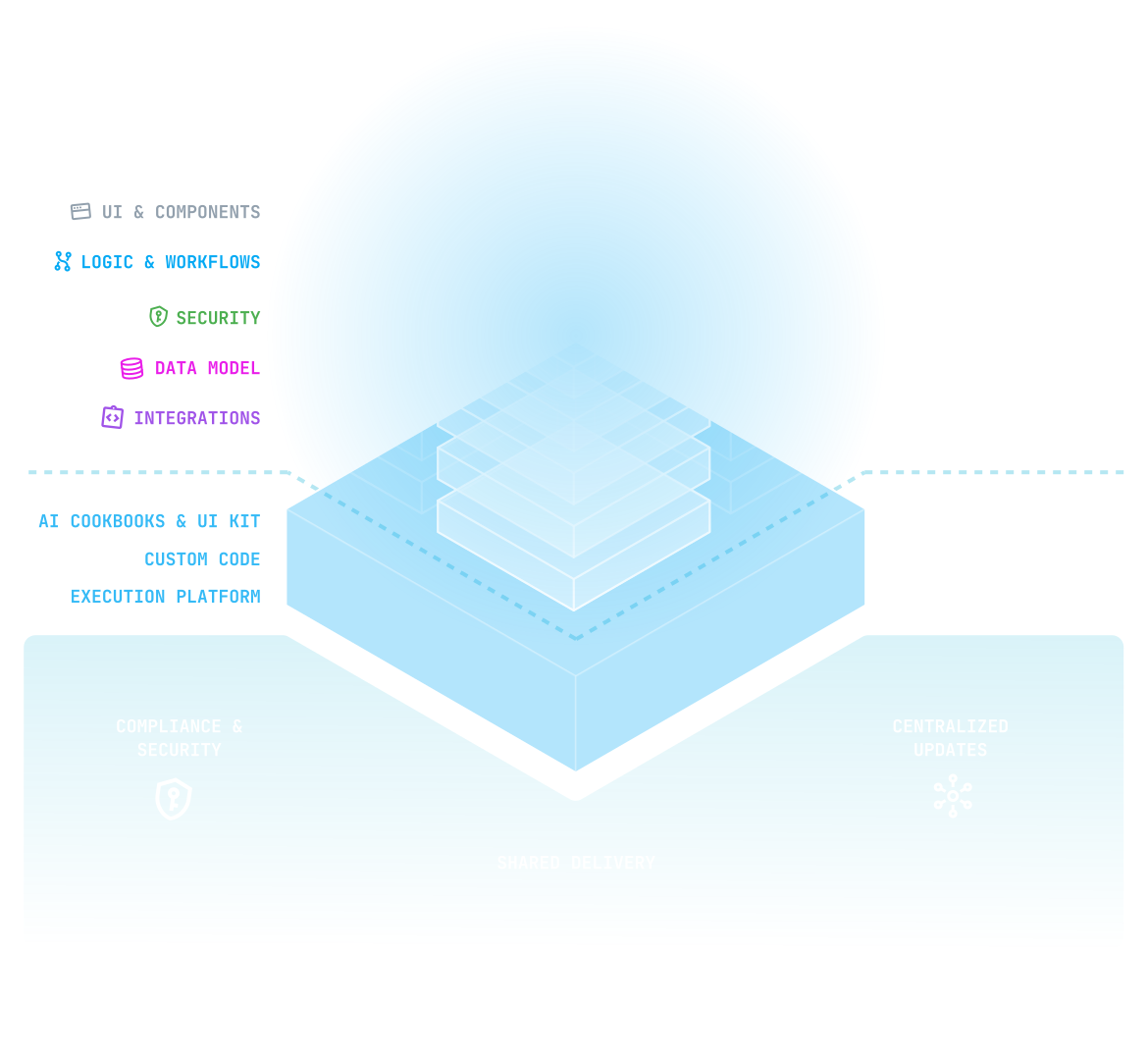
What this architecture unlocks
Launch faster because each new app starts from a proven delivery model.
Reduce patching, rework, and long-term upkeep across the application portfolio.
Apply platform improvements once instead of managing upgrades app by app.
Keep governance, compliance, and security controls consistent as delivery scales.
Proof
The model matters because it keeps working after launch.
Complex healthcare delivery launched from one governed foundation, with compliance needs handled without multiplying platforms.
20+ major React Native releases absorbed, with hundreds of hours avoided.
Curated templates
You can start from scratch with a prompt or Figma design. But we are seeing remarkable results when teams begin with one or more similar templates and use an agent such as Claude Code, Codex, Cursor, or Antigravity. These agents can understand and adapt existing Buzzy application definitions—combining proven data, roles, screens, and workflows into sophisticated new applications with impressive speed and quality.
Managed template showcase
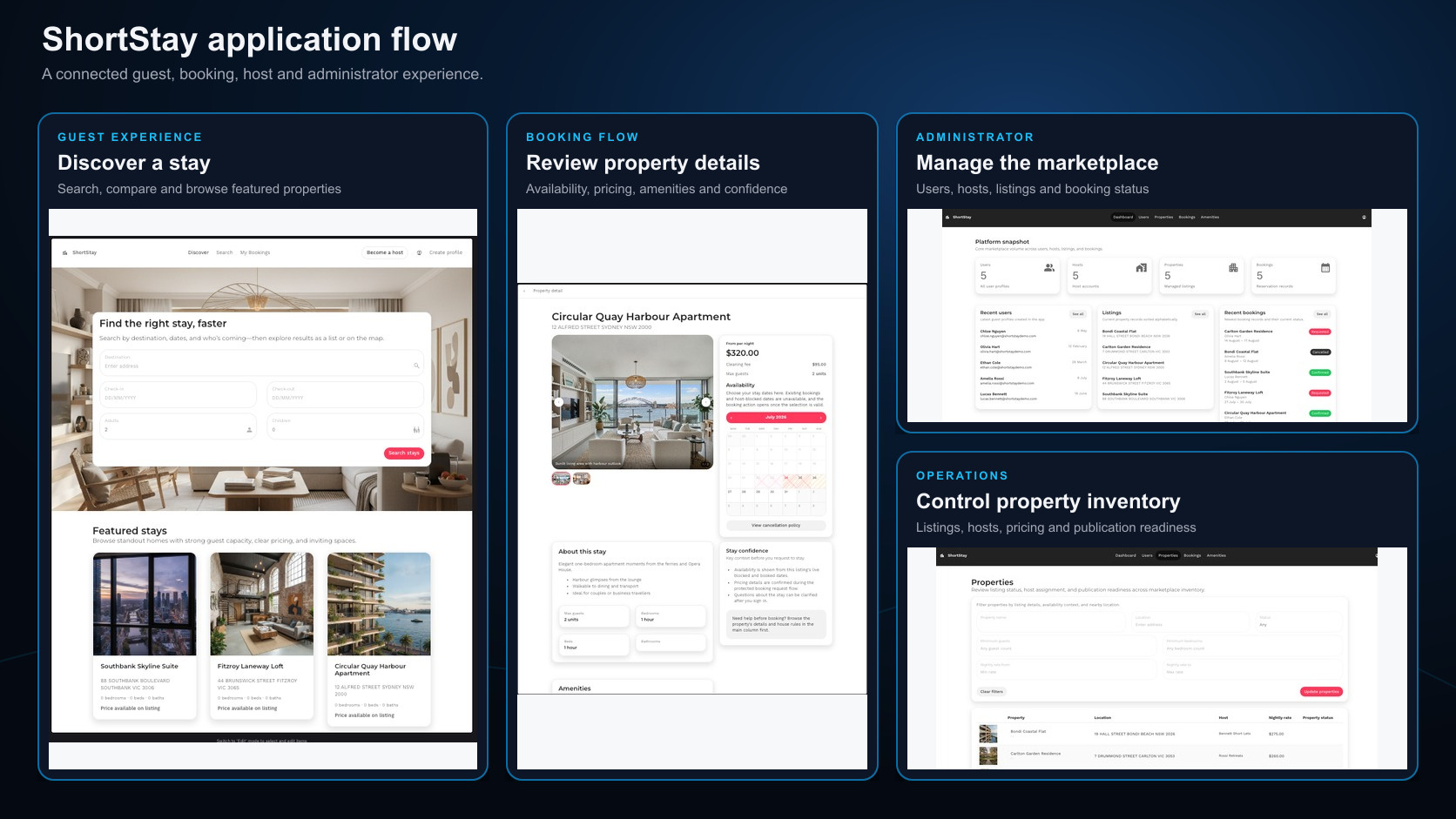 Multi-sided marketplace ShortStay View details →
 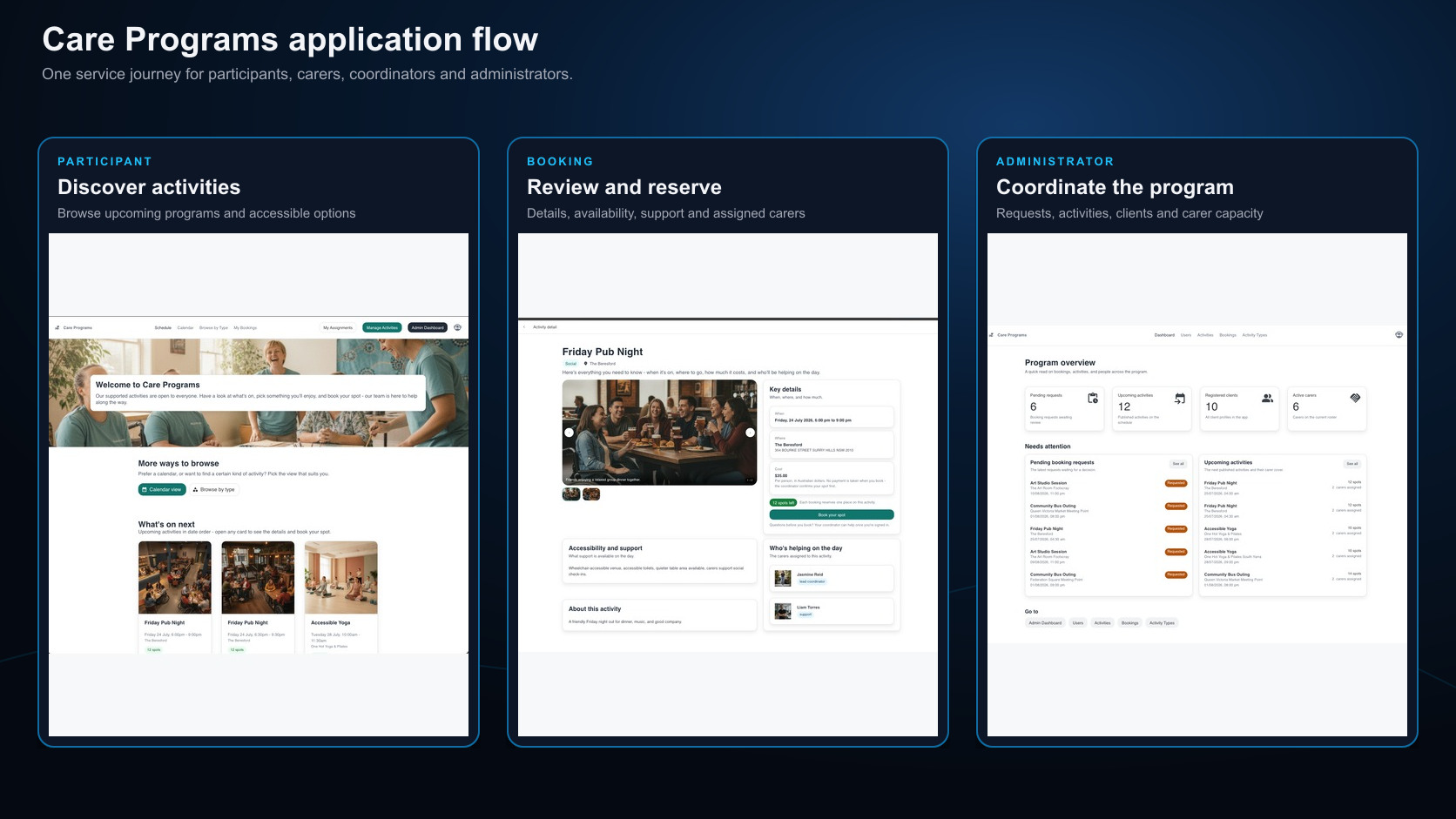 Care services Care Programs View details →
 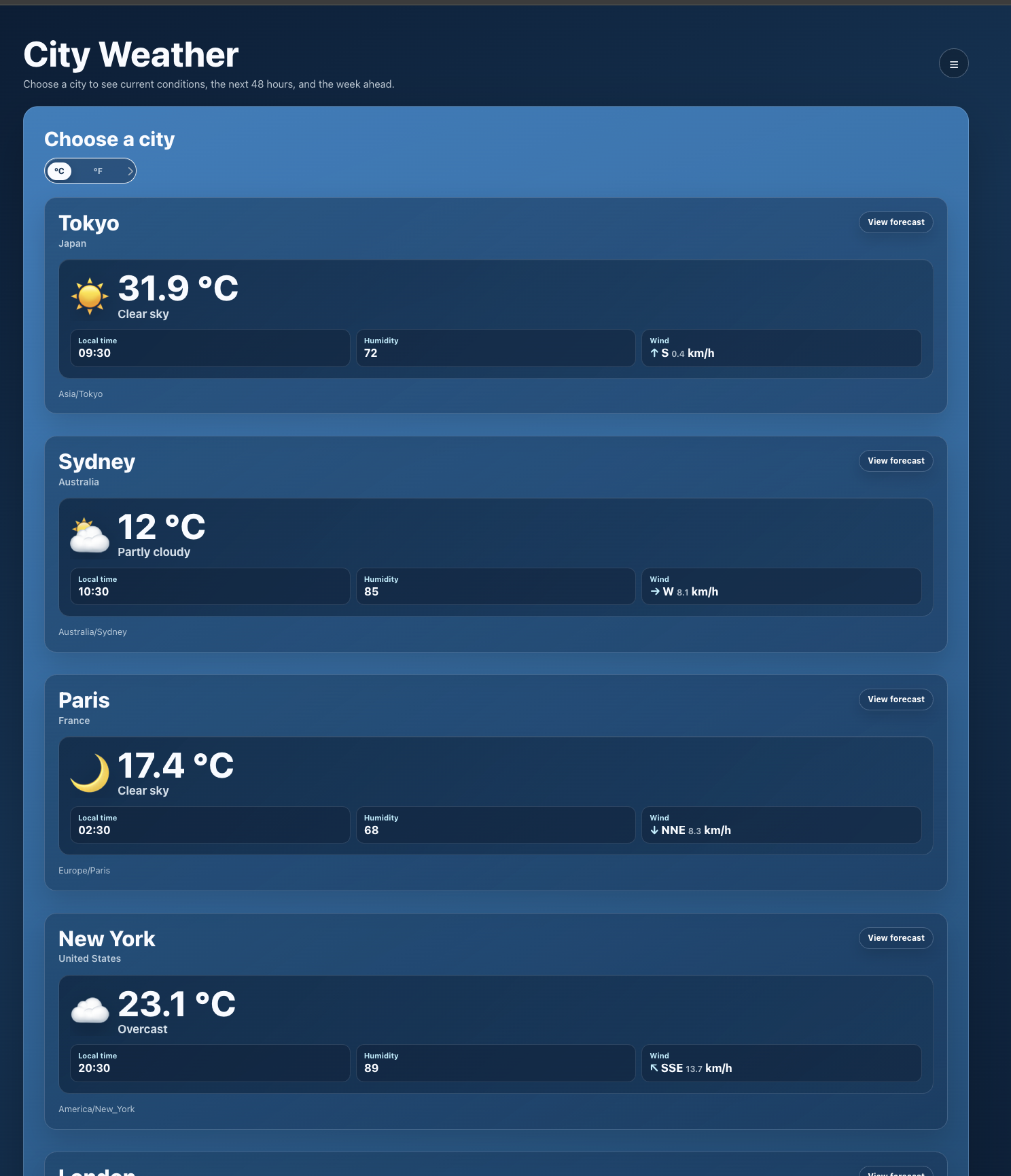 Public information City Weather View details →
 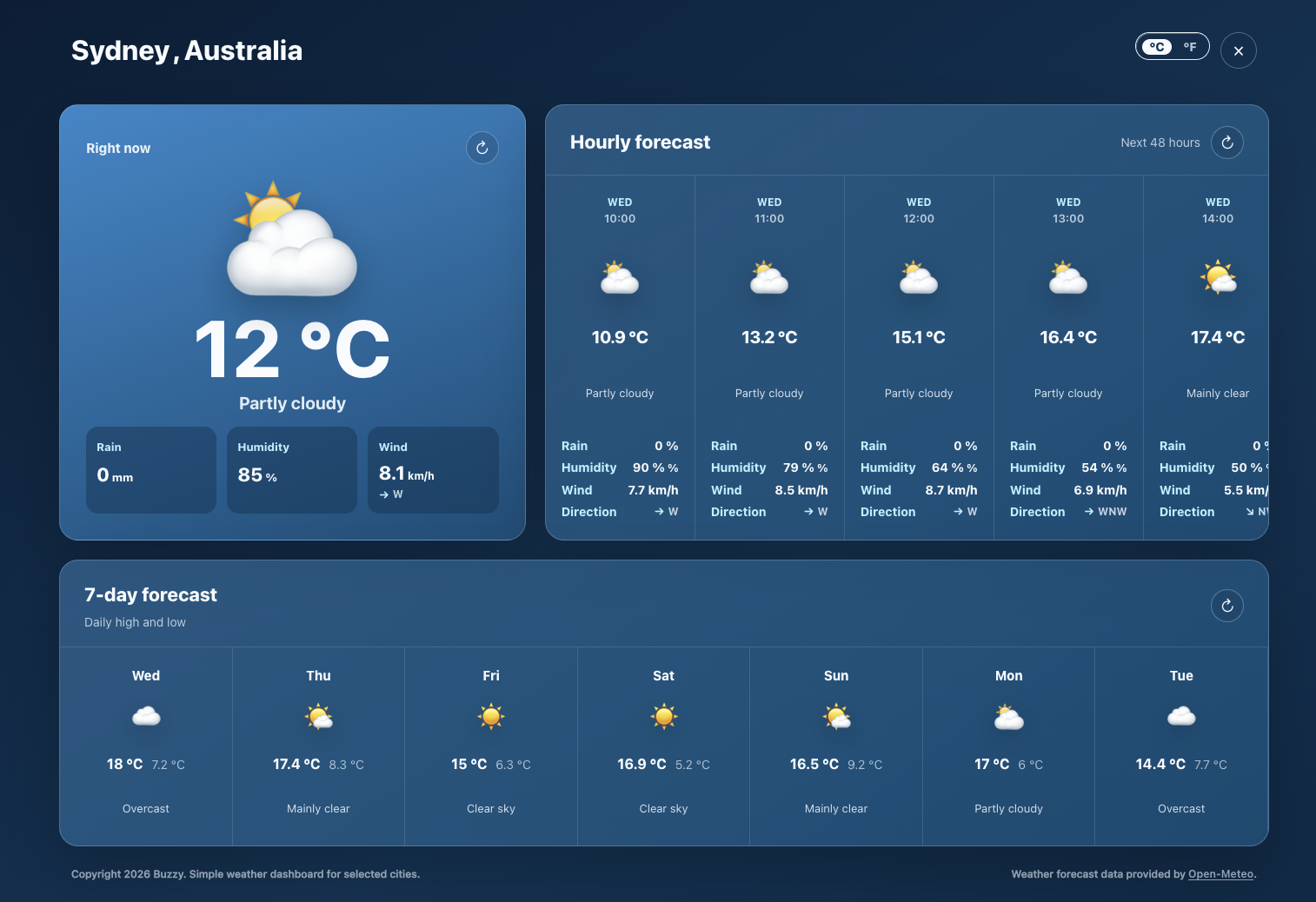 Data dashboard Weather App View details →
 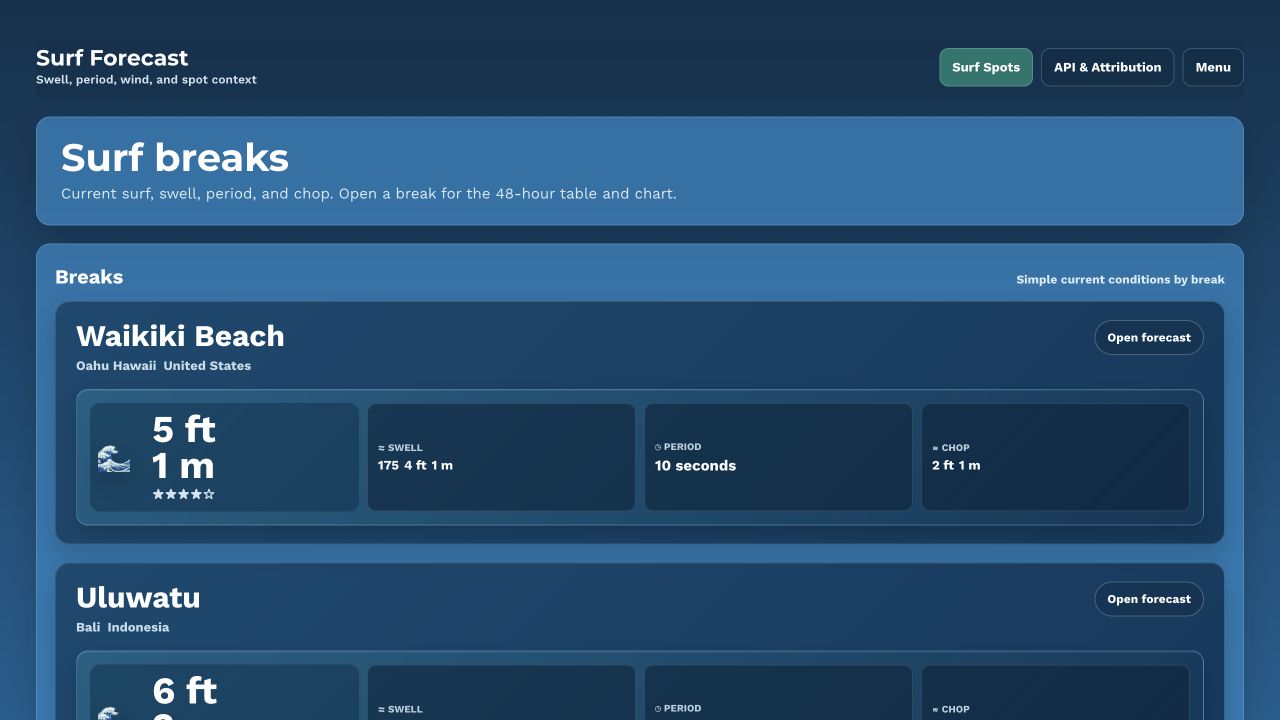 Marine conditions Surf Forecast View details →
 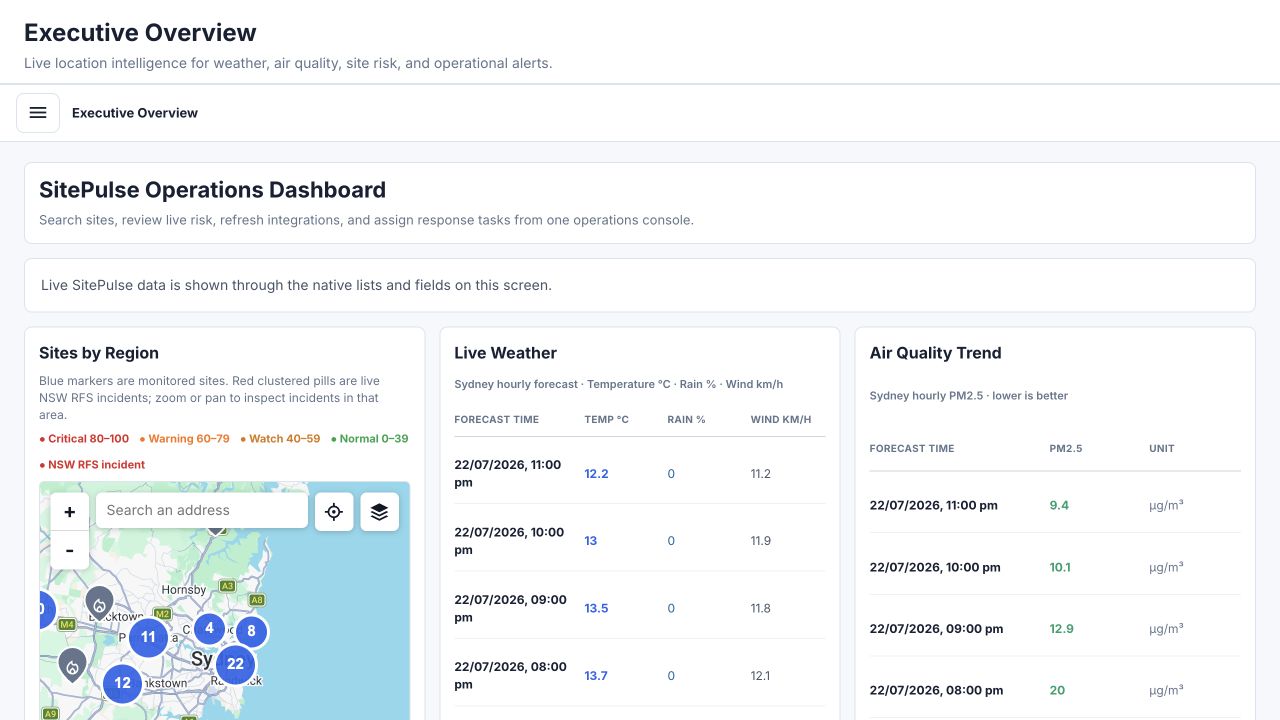 Operations intelligence SitePulse Operations Dashboard – Native View details →
 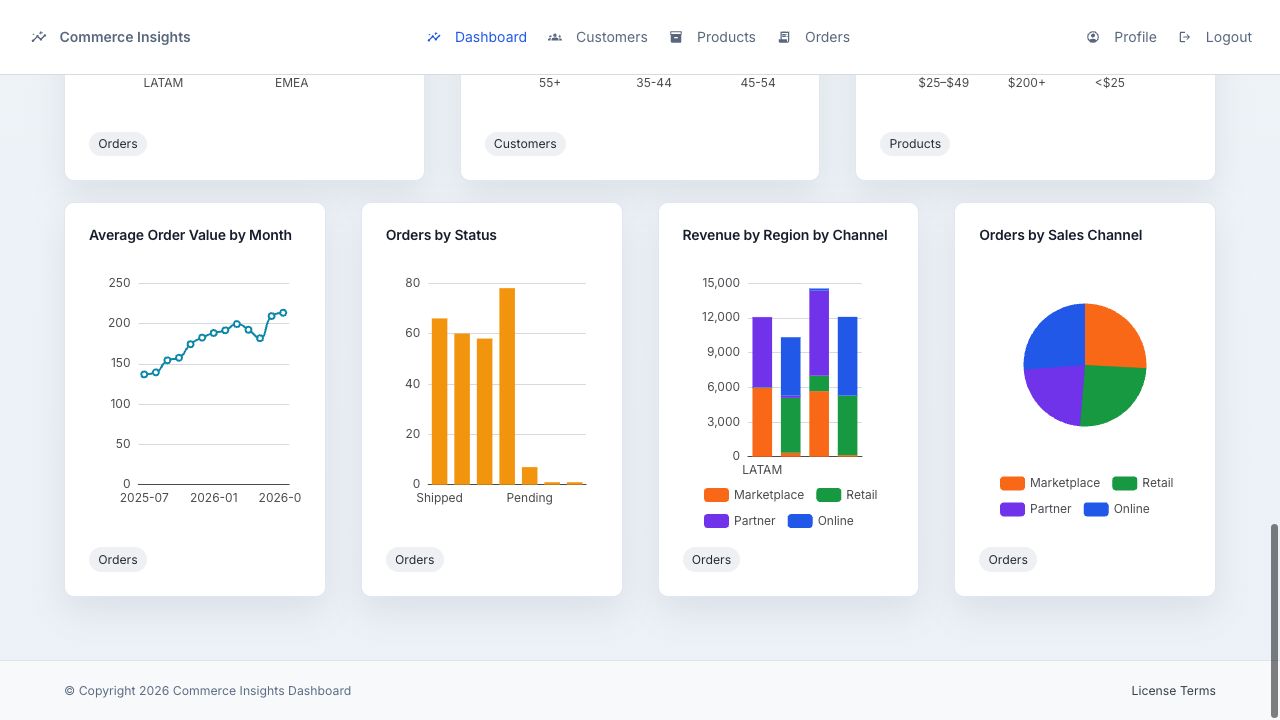 Commerce analytics Commerce Insights View details →
 Who is Buzzy for?
For teams that need to move fast without losing control.
Move faster with governance, not a growing cleanup burden.
Ship faster without creating extra drag for the roadmap later.
Move from AI experiments to production systems the business can trust.
Deliver durable apps without inheriting maintenance sprawl.
Starting point
Start from a prompt, a design, or an existing system.